7 Sep 2026
The Hidden Mechanics of Probability in Browser-Based Card Tournaments
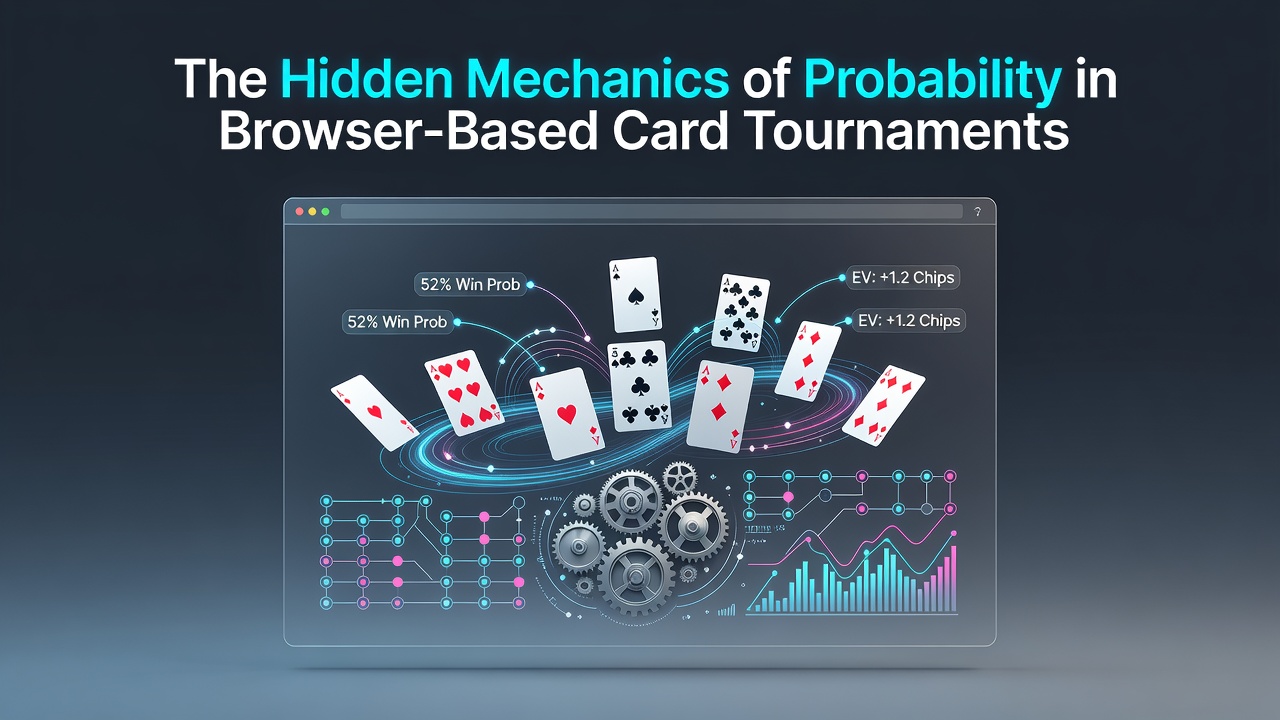
Browser-based card tournaments rely on intricate probability systems that operate behind the scenes to ensure fair play across thousands of simultaneous participants, and these systems combine cryptographic random number generation with server-side validation protocols that differ substantially from traditional physical card mechanics. Developers implement pseudo-random algorithms such as the Mersenne Twister or Fortuna, which seed values from hardware entropy sources including mouse movements and keyboard timings, while JavaScript environments handle initial client-side calculations before transmitting results to centralized servers for verification.
Core Algorithms Driving Randomness
Each card draw in these tournaments undergoes multiple layers of transformation where raw random bits convert into deck permutations through Fisher-Yates shuffling adapted for large-scale multiplayer sessions, and this process occurs within milliseconds to maintain seamless gameplay across global time zones. Data from industry reports indicate that modern implementations incorporate additional entropy pools refreshed every few seconds, reducing predictability risks that older linear congruential generators once presented in early browser games. Observers note that certification bodies in various regions require periodic audits of these algorithms to confirm statistical uniformity across billions of simulated hands.
Server-Side Validation and Anti-Prediction Measures
Tournament platforms separate the random generation process from the user interface so that no single browser instance can influence outcomes, and this separation involves continuous synchronization between multiple data centers that cross-check results against expected probability distributions. In September 2026 several major providers plan to roll out enhanced WebAssembly modules that accelerate these checks while adding zero-knowledge proofs to demonstrate fairness without exposing proprietary code. Research from academic institutions across North America and Europe shows that such distributed validation cuts collusion vectors by isolating each player's view of the deck until the moment of reveal.
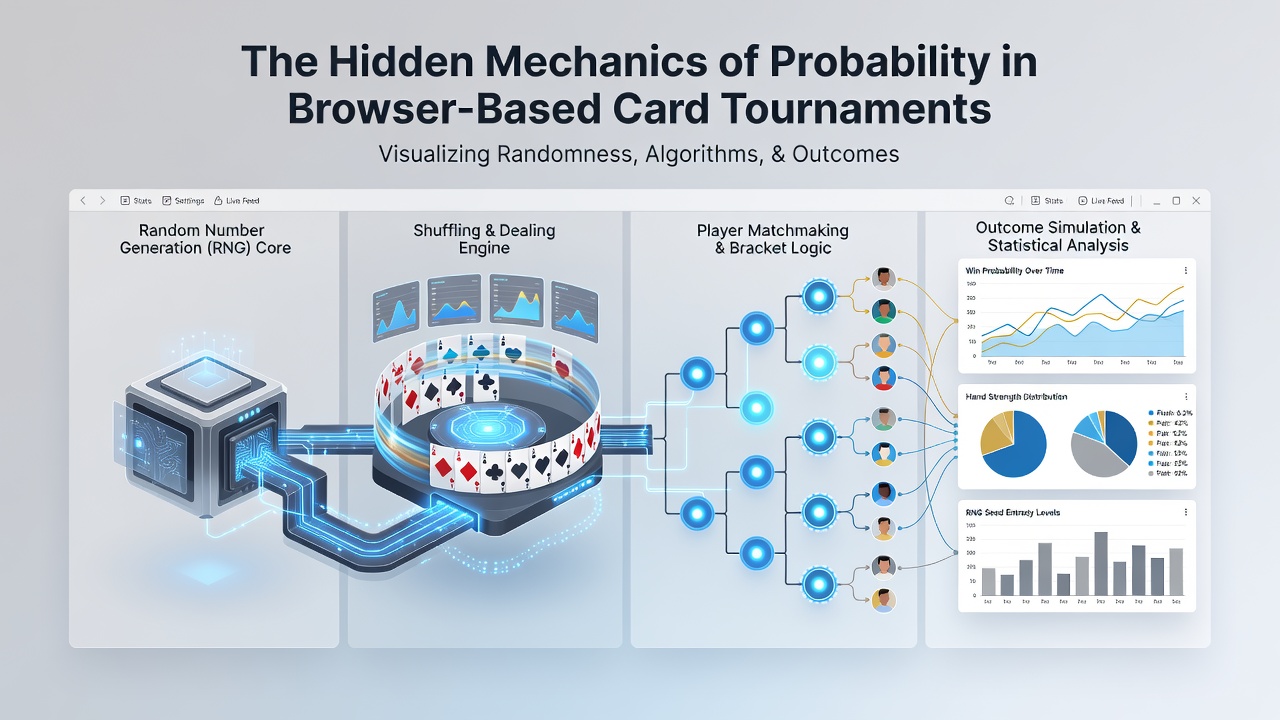
Players interact with interfaces that mask the underlying mathematics yet still receive verifiable proof of shuffle integrity through cryptographic hashes posted after each round, allowing independent verification by third-party auditors. Figures from regulatory summaries in Canada and Australia reveal that platforms maintaining these transparency logs experience fewer disputes over hand outcomes compared to those relying solely on internal logging.
Probability Scaling in Multiplayer Formats
Multi-table tournaments introduce additional complexity because probability calculations must account for simultaneous actions across hundreds of tables while preserving independence between each match, and this requires dynamic load balancing that reallocates processing resources without altering statistical properties. Those who study large datasets from past events have documented how variance in early rounds influences later survival rates, with combinatorial mathematics determining the exact likelihood of specific hand distributions under varying player counts. External analyses published by European gaming research centers confirm that browser optimizations such as WebSocket connections reduce latency spikes that could otherwise skew perceived randomness during peak hours.
Regulatory Frameworks Across Regions
Government agencies in the United States, including the Nevada Gaming Control Board, mandate specific testing standards for random number generators used in digital card events, whereas authorities in Australia emphasize ongoing monitoring through independent laboratories that sample live tournament data. One link to detailed technical requirements appears on the Gaming Standards Association site, which outlines interoperability protocols adopted by numerous browser platforms. Another resource from the Australian Securities and Investments Commission details compliance expectations for probability transparency in online competitions. These frameworks collectively push developers toward hybrid models that blend on-device computation with immutable server records.
Future Developments and Browser Constraints
Advances in browser capabilities continue to reshape how probability engines function, particularly with the introduction of new cryptographic APIs that provide stronger client-side entropy without increasing bandwidth demands. Tournament organizers now explore integration of quantum-resistant algorithms to future-proof systems against emerging computational threats, and preliminary tests conducted in controlled environments demonstrate maintained performance under high concurrency loads. Data indicates that participants in regions with stricter data residency rules benefit from localized probability servers that still feed into global leaderboards through encrypted channels.
Conclusion
The interplay between algorithmic design, regulatory oversight, and browser technology forms the foundation of probability handling in these digital tournaments, and continued refinement of these elements supports consistent fairness across expanding participant bases. As platforms prepare for updates scheduled around September 2026, the emphasis remains on verifiable, distributed systems that withstand scrutiny from both technical auditors and player communities worldwide.